
Specialists in Asian languages: what makes them different
Chinese, Japanese, Korean and their neighbours ask for different choices at almost every step, from the writing system to the way politeness is built into a sentence.
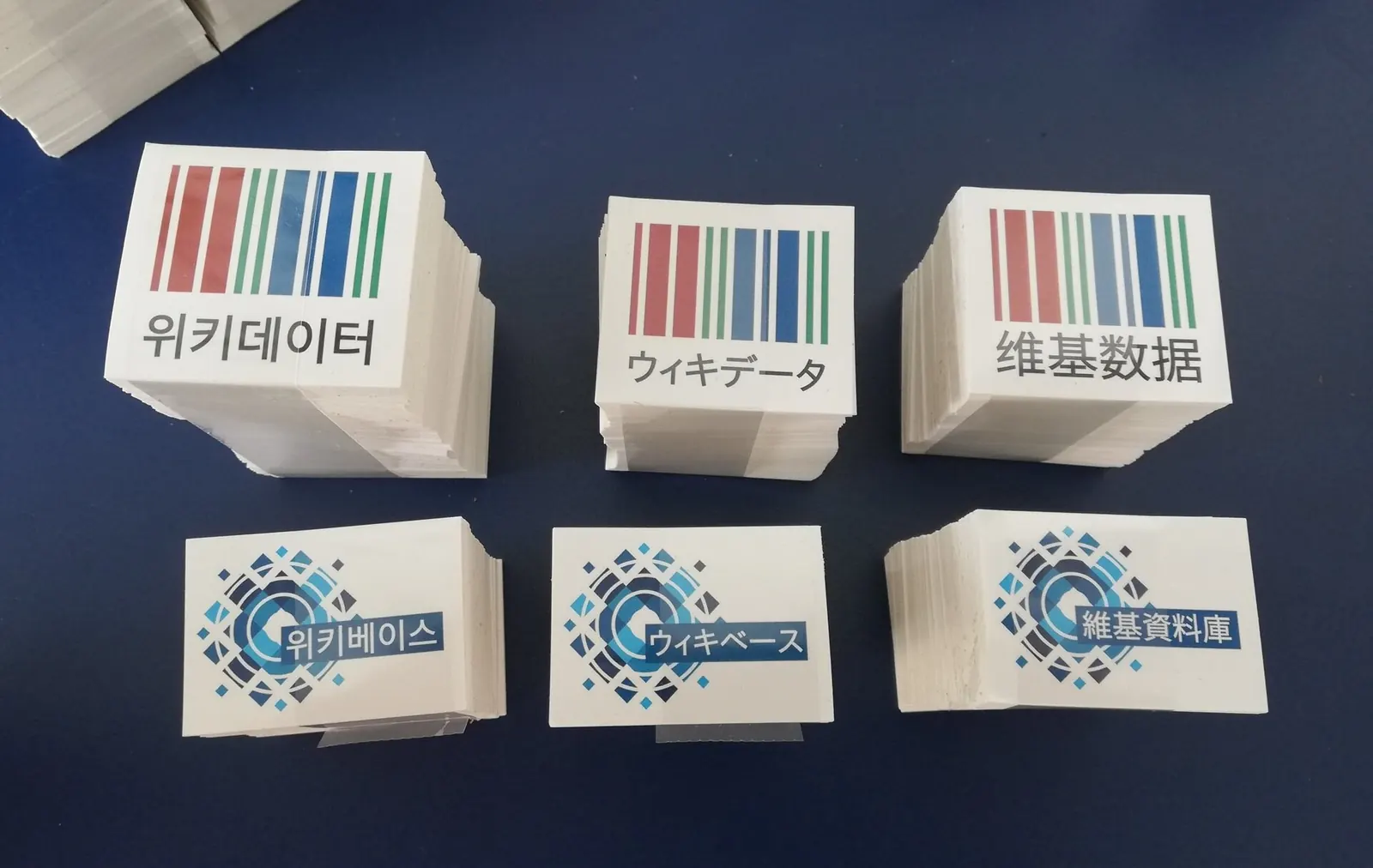
Translating into or out of an Asian language is not just a matter of swapping words. The script, the sentence structure, the way respect is expressed and even the space a text takes up on the page all change. Knowing these differences early saves rework later, and it helps you brief a translator well.
This page focuses on Chinese, Japanese and Korean, with a few notes on other languages in the region. For a closer look at each of the three, see our notes on Chinese, Japanese and Korean.
Writing systems
The three languages use very different scripts, and that shapes everything from typing to layout.
- Chinese is written with characters (hanzi). Each character usually stands for a syllable and often a meaning. Words are commonly made of one to four characters, and there are no spaces between them.
- Japanese mixes three scripts in one sentence: kanji (characters borrowed from Chinese), hiragana (used for grammar and native words) and katakana (often used for foreign words and emphasis). Latin letters and numerals appear as well.
- Korean uses hangul, an alphabet-like system in which letters are grouped into syllable blocks. Hanja, the Chinese-derived characters, are now rare in everyday text.
Thai, Vietnamese, Hindi and others add further variety. Thai has no spaces between words. Vietnamese uses the Latin alphabet with many stacked accent marks. Hindi uses Devanagari, where letters join along a top line. Each needs its own checks.
Simplified and traditional Chinese
Chinese is written in two main character sets. Simplified characters are standard in mainland China and Singapore. Traditional characters are used in Taiwan, Hong Kong and Macao, though usage differs between them.
The difference is not only a font switch. Some simplified characters merge several traditional ones, so automatic conversion can produce wrong results. Vocabulary also varies by region: words for everyday technology, food and transport are often different between the mainland and Taiwan, for example.
Before ordering a translation, decide who the readers are. "Chinese" is not a complete brief. Say whether you need simplified for the mainland, traditional for Taiwan, or traditional for Hong Kong. Spoken Cantonese and written Chinese also differ, which matters for subtitles and scripts.
Word order and sentence structure
English puts the verb in the middle of the sentence: subject, verb, object. Japanese and Korean place the verb at the end, and they mark roles with small particles. A long English sentence with several clauses often has to be taken apart and rebuilt in the right order.
Chinese word order is closer to English, but it has no verb conjugation or plural endings. Time, number and context are carried by other words. Subjects and objects are often left out when the context makes them clear, and the translator has to decide when to restore them in English.
For this reason, very short source texts with little context are hard to translate. A single word on a button may need a question back to the client. Supplying screenshots or a short description helps a great deal.
Politeness and honorifics
Japanese and Korean build levels of politeness into verbs and vocabulary. The same message can be written in a casual, polite or highly formal form, and the choice signals the relationship between writer and reader.
- A customer-facing notice usually calls for polite, respectful forms.
- Internal team messages may be more relaxed.
- Legal and official-style letters tend toward the most formal level.
Chinese has fewer grammatical markers of respect, but it still has formal and informal vocabulary, and a choice between forms of "you" in some contexts. Tone also depends on how direct a request is allowed to be.
Tell your translator who is speaking and who is listening. A style guide with a few sample sentences removes much of the guesswork. See glossaries and style guides for how to set one up.
Text expansion and contraction
Text length changes when you move between English and an Asian language, and it does not change in the same direction for all of them.
- Chinese and Japanese text is usually much shorter in character count than English, though the characters are visually denser.
- Korean often lands closer to English in length, but it varies with the content.
- Going the other way, translated English can be noticeably longer than the original.
Design for both directions. Buttons, tables and menus need room to grow and shrink. Line height often needs to be larger for East Asian text so the characters stay readable. Avoid fixed-size text boxes wherever you can. These points matter most in website localisation.
Fonts and character support
A font that looks fine in English may not contain a single Chinese, Japanese or Korean character. When that happens, software shows empty boxes or substitutes a mismatched font.
- Choose a typeface with full coverage for the target language. Fonts for Chinese, Japanese and Korean are generally separate, because the same Unicode character can be drawn differently in each.
- Embed fonts in PDFs so the text looks the same on every device.
- Set the language tag on web pages and documents. It helps browsers select the correct glyph shapes.
- Avoid bold and italic on East Asian text unless the font has real versions. Faked styles look crude, and italics are rarely used in these scripts anyway.
File formats and encoding
Use UTF-8 for text files, web content and data. Older encodings, such as Shift-JIS, GB2312 or Big5, still turn up in legacy systems, and mixing them with UTF-8 produces garbled characters.
Editable files are always better than flattened ones. Send the original design file, spreadsheet or document, not a screenshot or a scanned PDF. Text inside images has to be retyped and the image rebuilt. If you can, keep text out of images altogether. Our guide to preparing files for translation covers this in more detail.
Check also how your system handles line breaks. Chinese and Japanese can break between almost any two characters, while Korean normally breaks at spaces. Punctuation differs too: full-width marks such as the Chinese and Japanese full stop are standard, and some marks must not begin or end a line.
Names, numbers and dates
Personal names in East Asia usually place the family name first. Decide how names will appear and stay consistent. Numbers may be grouped differently: Chinese, Japanese and Korean count in units of ten thousand, which is a common source of error when large figures are converted. Dates are normally written year, month, day.
Product names and technical terms need a decision too: translate them, transliterate them, or keep the Latin form. A shared glossary settles this once for the whole project.
Working with a specialist
The best results come from a translator who works into their own first language and knows the subject. Review by a second linguist is worth it for anything public. Our pages on proofreading and editing and how translation projects work explain what that looks like in practice.
To summarise the checklist: name the regional variant, describe the readers and tone, send editable files, allow room for length changes, and confirm font support. With those in place, most of the surprises disappear.
If you have a project in mind, you can reach us through the contact page.