
Spanish and Portuguese: regional variants that change the text
Spanish and Portuguese each have more than one standard form, and choosing the right one before translation starts saves a lot of rework.
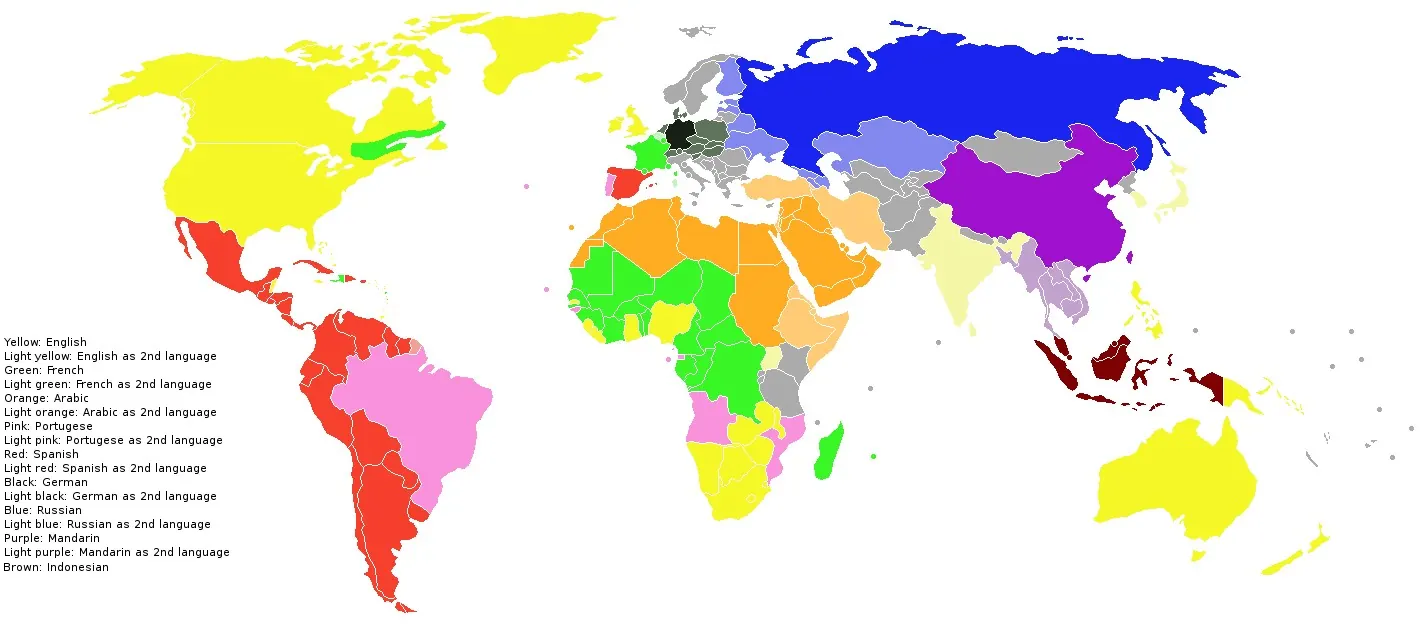
"Spanish" and "Portuguese" sound like single targets. In practice each is a family of regional standards, and a text that reads naturally in Madrid may feel slightly off in Mexico City, just as a Lisbon text can feel foreign in São Paulo. The differences are not usually a matter of right and wrong. They are a matter of fit.
This page walks through the differences that most often change a translation, and ends with a simple way to describe your readers in the brief.
Spanish: Spain and Latin America
Spanish is spoken across Spain, Mexico, Central and South America, the Caribbean and parts of the United States. Written Spanish is more uniform than spoken Spanish, but the gaps are real enough to matter in marketing, user interfaces and anything aimed at the general public.
Vocabulary
Everyday words differ by region. Some well-known examples:
- A computer is ordenador in Spain and usually computadora in much of Latin America.
- A mobile phone is móvil in Spain and often celular in Latin America.
- To drive is conducir in Spain and commonly manejar in many Latin American countries.
- A car is coche in Spain, while carro or auto are common elsewhere.
Latin America is not one block either. Mexico, Argentina, Colombia and Chile each have their own preferences, and some words that are neutral in one country are awkward or humorous in another.
Forms of address
Spain uses tú (informal singular) and vosotros (informal plural), with usted and ustedes for formal speech. Most of Latin America drops vosotros and uses ustedes for every plural "you". Parts of Latin America, notably Argentina and Uruguay, also use vos instead of tú in everyday speech, with its own verb endings.
For a website or app, this is one of the first decisions to make. A button reading "Descubre" (tú) and one reading "Descubrid" (vosotros) will land very differently with a Colombian reader.
Spelling and style
Spelling is largely shared, since the Royal Spanish Academy and the national academies work together on a common standard. The differences show up elsewhere: date and number formats, punctuation habits, the use of loanwords, and tense preferences. Spain tends to use the present perfect for recent events, while many Latin American speakers prefer the simple past.
Portuguese: Brazil and Portugal
The gap between Brazilian and European Portuguese is wider than the gap between Spanish regions, and most clients treat them as two separate translation targets. Brazil has a much larger population, but Portugal and the Portuguese-speaking countries of Africa and Asia follow the European norm in many respects.
Vocabulary
- A bus is ônibus in Brazil and autocarro in Portugal.
- A mobile phone is celular in Brazil and telemóvel in Portugal.
- Breakfast is café da manhã in Brazil and pequeno-almoço in Portugal.
- A file, in computing, is arquivo in Brazil and ficheiro in Portugal.
Forms of address
Brazilian Portuguese commonly uses você for "you" in ordinary writing, and in many regions it mixes with tu in speech. European Portuguese keeps a finer set of choices: tu among friends, você in some contexts, and often no pronoun at all, using the person's name or title or just the verb form. Customer-facing text in Portugal tends to sound more formal and indirect than its Brazilian equivalent.
Spelling
An orthographic agreement brought the two spelling systems closer, but differences remain. Words like facto (Portugal) and fato (Brazil), or equipa and equipe, still separate the two. Grammar differs as well, for example in how pronouns are placed and whether the progressive uses estar a + infinitive (Portugal) or estar + gerund (Brazil).
Why one translation rarely fits everyone
A neutral or "international" version is possible for some content, such as technical manuals with plain wording. For anything persuasive, friendly or tied to a local setting, a neutral version tends to feel flat everywhere. Legal, financial and health texts also carry local terminology that does not move cleanly across borders. If your document touches those areas, see translating contracts and technical documents.
How to name your audience in the brief
"Spanish" or "Portuguese" alone is not enough. A good brief names the readers and the setting. Include:
- The country or countries. "Spanish for Mexico" is better than "Latin American Spanish". If you truly need several markets, list them in order of priority.
- The register. Say whether the tone is informal (tú, você) or formal (usted), and whether the text should avoid addressing the reader directly.
- The medium. A website, a printed leaflet, a subtitle file and a legal letter all call for different handling.
- Existing terminology. Share any approved terms, product names and earlier translations. A glossary and style guide keeps variants consistent across a whole project.
- Units and formats. Mention currency, date style, decimal separators and measurement units your readers expect.
When you need more than one version
Some projects justify separate Spanish or Portuguese versions. Software interfaces, consumer websites and advertising usually do. Internal documents or technical reference material may manage with one. If you are adapting a whole site, the notes on localisation for websites cover how to structure the work, and preparing files for translation explains how to hand over text so variants can be tracked cleanly.
A final review by a reader from the target country is a cheap safeguard. See proofreading and editing translations for how that step fits in. For the wider picture of how a job moves from brief to delivery, read how translation projects work.