
European language specialists: what to know before commissioning
European languages look familiar on the surface, but each one carries habits of address, grammar and regional usage that change how a text should be translated.
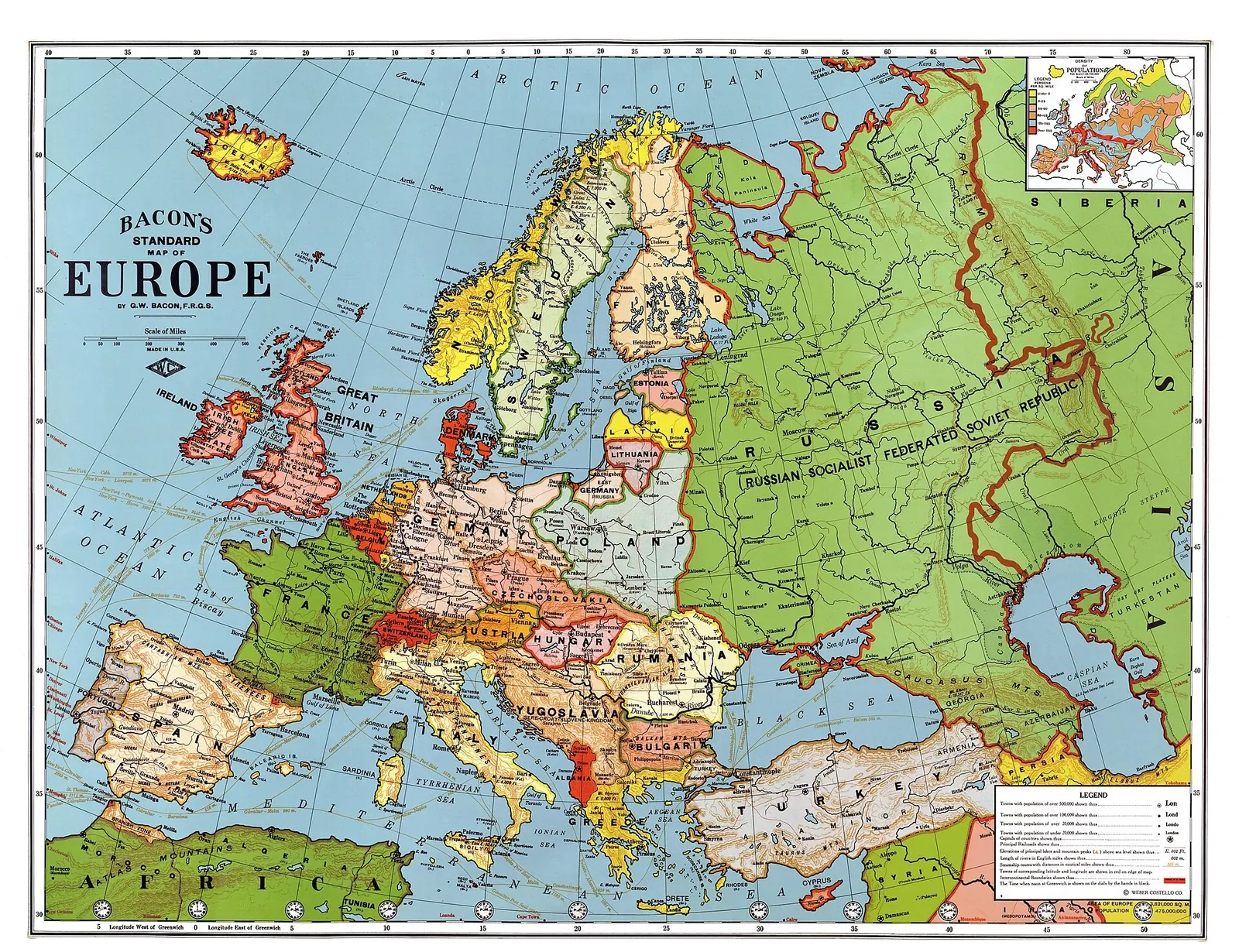
Many people assume that translating between English and a European language is the easy end of the field. The alphabets are familiar, plenty of words look alike, and the grammar seems manageable. In practice, the closeness is part of the trap. A translator has to decide how formal to be, how to handle gender, how long a sentence can sensibly run, and which regional form your readers expect. This page walks through the main issues so you can brief a translator well.
Romance, Germanic and the rest
Europe's languages fall into several families, and the family often predicts the kind of decisions involved.
- Romance languages (French, Spanish, Italian, Portuguese, Romanian, Catalan) descend from Latin. They share gendered nouns, verb endings that carry a lot of information, and a strong sense of formal and informal address.
- Germanic languages (German, Dutch, Swedish, Danish, Norwegian) are related to English but diverge in word order and in how readily they build long compound words.
- Slavic languages (Polish, Czech, Russian, Croatian and others) use case endings, so the form of a noun changes with its role in the sentence.
- Other languages such as Finnish, Hungarian, Greek and Basque belong to different families and behave quite differently from anything above.
None of this means a translator needs to know the whole map. It means that "a European language" is not one task, and a person who is excellent in Spanish is not automatically the right choice for Hungarian.
Formality: you, you, or you
English has one word for addressing another person. French has tu and vous, Spanish has tú and usted, Italian has tu and Lei, and German has du and Sie. Choosing between them sets the tone of an entire document.
Some practical points:
- Instructions, legal text and letters to customers usually lean formal.
- Apps, youth brands and some internal communication may lean informal, but the convention differs by country and industry.
- Consistency matters more than almost anything else. Switching halfway through a page reads as a mistake.
Tell your translator who the readers are and how your organisation normally speaks to them. That one sentence can save a round of revisions.
Gendered nouns and who you are talking about
In French, Spanish, Italian, German and many other languages, every noun has a grammatical gender, and adjectives and articles follow it. English can say "the new user" without revealing anything about the person. Spanish or German often has to choose a form.
This affects job titles, forms, app interfaces and any text addressed to "you" when the reader's gender is unknown. Teams handle it in different ways: using paired forms, rewording to avoid the issue, or following a house convention for inclusive language. The right choice depends on the audience and on what is accepted in that country, which is why it is worth deciding in advance and writing it into a style guide.
Compound words and sentence length
German is famous for compounds, and Dutch and the Scandinavian languages do the same. Several ideas are joined into one long word. This is perfectly natural for native readers, but it creates a few issues for translation:
- A compound may have no neat English equivalent, so it becomes a phrase. Going the other way, an English noun string like "customer account password reset page" has to be rebuilt as a compound or a prepositional phrase.
- Translated text is often longer or shorter than the original. German and Romance languages often run longer than English, which matters for buttons, menus and layouts.
- Terms should be fixed once. If one document uses two different compounds for the same part, readers will wonder whether they are two parts.
For more on this language, see the German translation notes.
Regional variants are not a detail
Many European languages are spoken in more than one country, and the differences go beyond a few spelling changes.
Brazilian and European Portuguese
Brazilian and European Portuguese differ in vocabulary, spelling conventions, pronoun use and the feel of everyday phrasing. A text written for readers in Brazil can sound foreign or awkward in Portugal, and the reverse is also true. Software labels, forms and marketing copy are the places where this shows most. If your readers are in both markets, plan for two versions rather than one compromise.
Spanish across countries
Spanish in Spain, Mexico, Argentina and elsewhere differs in vocabulary, in whether vosotros or ustedes is used for a group, and in the everyday words for common things. Neutral Spanish can work for some content, but it is a deliberate choice, not a default. More detail is on the Spanish and Portuguese notes page.
French, German and others
French in France, Belgium, Switzerland and Canada shares a core but varies in vocabulary, number words and conventions. German in Germany, Austria and Switzerland differs in vocabulary and in details such as the use of the letter ß, which Swiss writing does not use. Even Dutch has Netherlands and Flemish preferences. Naming the country, not just the language, is the simplest fix.
Numbers, dates and small details
Small formatting habits trip up otherwise good texts. Many European countries use a comma as the decimal separator and a space or full stop for thousands. Dates are written day first. Quotation marks differ: French uses « guillemets », German often uses „low-high" marks. Currency symbols may follow the number. A translator will normally handle these, but they should be told if the text goes into a layout, a spreadsheet or a database where the format is fixed.
How to brief a translator for a European language
A short brief makes a large difference. Include these points when you send material:
- The target country, not just the language.
- The readers and the level of formality.
- Any preferred terms, product names that must stay in English, and a note on gender-neutral wording.
- Where the text will appear: print, web page, app, subtitle, or manual.
- Reference material such as earlier translations or a glossary.
Good preparation of the source files helps too, and preparing files for translation covers the practical side. If you are weighing whether a machine draft is enough, read about machine translation and human review, and for the order of steps in a project see how translation projects work.
Choosing the right person
The best fit is usually a translator who works into their own first language, lives with it day to day, and has experience in your subject. A medical leaflet, a software interface and a brochure for a hotel need different habits. Ask what kinds of text the translator handles regularly, and ask how they deal with questions about the source. Good translators ask questions; it is a sign of care, not weakness.
If you are working across several languages at once, the same principles apply to each, though the details differ. Languages further afield bring their own questions, which are covered in the pages on Asian languages. For the bigger picture, start from the main translation page.